New computer!

Thanks to some generosity from parties unnamed, who were tired of hearing my old laptop wheeze and burble as it attempted to keep itself powered on, I am now the proud owner of an incredibly shiny new MacBook. I was skeptical of the new macbook design mostly because of the idiotic move towards only having one port. Sure, the future is wireless, but the future isn’t here yet, apple! I need a USB port! So I also ponied up for the (ridiculously expensive) adapter so that I can, you know, use USB stuff.

So far I really like it. I had heard that the new keyboards were weird, but I actually like the new macbook keyboard better than the one on my old air – it’s pretty responsive but you have to give the keys a good tap, which I like. (I’m a person who voluntarily used one of the spring-loaded keyboards on my office computer for a long, long time because I hated the HP keyboard so very, very much.)

I don’t have a lot of technical knowledge about computers, despite having worked for a year and a half at the Fifth Avenue Apple Store, but I am impressed with the power and speed so far of this little machine. Transferring everything from my old computer (over a USB-USB cable that my dad had to go out and buy at Radio Shack) has been a fairly fast endeavor, and the screen is SO PRETTY OMG. Can’t wait to watch YouTube makeup tutorials on this sucker.

In other news, I’ve been meaning to do a blog post about the move to a new agency in January, but haven’t had the time since I’ve been home. Rest and recreation with one’s family is always so much more time consuming than I remember and I have accomplished maybe 2 of the 340 things I wanted to do in the three weeks I’ve been in Texas. But I HAVE –

-watched six and a half seasons of Midsomer Murders
-written half of my holiday cards
-gone through my old online bookmarks and made sure all of them were tagged (1500 out of 2000, go Jen)
-started reading like four books before setting them down
-eaten a lot of Mexican food
-lost like 10 pounds

So not an *entirely* wasted vacation. I’m excited to get back to New York on Wednesday and hit the ground running! More news on the move to the Barry Goldblatt Agency soon. 🙂


New query address

Hello, all!

I finally bit the bullet and created a dedicated query inbox for myself. If you are interested in querying me, you should first visit my about page to see what I am looking for and my query guidelines, then you can send that query to:

query.judden@gmail.com

Anyone who has sent a query to my regular email address will still get an answer, don’t worry!

Feelings about Superheroes Part 2

HOW DO YOU SOLVE A PROBLEM LIKE NATASHA

You’ll have to pardon the Sound of Music reference, but it drives me crazy when the only female avenger is described as a problem. But I think in this case there is a problem with Black Widow’s characterization in A:AOU, and it all stems from one source: she is the only main Avenger that hasn’t had a solo movie.

The audience has had at least two movies each for the other Avengers, not counting their first group outing. So that’s at least six hours of individual storytime for the audience to get to know someone. With Natasha Romanov, aka Black widow, we have far less time with her – she appears in Iron Man 2 and Cap 2 as a supporting player, and a team member in Avengers. So this trip down backstory lane in A:AOU doesn’t have as much to build on- she has fewer developed points of care.

That’s not to say that she doesn’t have any points of care: In Iron Man 2 she works closely with Tony and Pepper. In Cap 2 she develops a close friendship with Steve Rogers, and we see her genuine grief at Fury’s “death.” And in the first Avengers we have the relationship between Nat and Clint Barton, as I discussed in Part 1. So clearly even though we haven’t had a solo Widow movie yet, she does have relationships within the MCU universe.

So with this in mind, I don’t object wholesale to Black widow’s major points of character development in this film – the relationship with Bruce Banner and the revelation of her forced sterilization at the hands of the Red Room. I object to these things happening in what is essentially a characterization vacuum.

You know were would have been a great place to introduce Widow’s feelings about her sterility?

A solo Black Widow movie.

But since we don’t have a solo Black Widow movie, we have to go on the points of care we have previously been introduced to for Natasha. And this is where Part 1 of this post comes in. Natasha’s feelings about being unable to have children are given to the audience as a result of two weaker points of care storylines – the out-of-nowhere relationship with Banner and the out-of-nowhere Barton Family Farm.

Some people are saying that the Banner love story is actually foreshadowed in the Avengers, when she tries to talk him down from his green pedestal during the attack on the Helicarrier. I’m just going to throw it out there that “trying to convince a dude to calm down so that he won’t kill you” is not really a solid foundation for a relationship. And the way she interacts with Banner in this movie is just confusing – suddenly Black Widow is the one who gives Banner the “lullaby” that brings him down? This is another instance of something “cool” – the development of team strategies and tools offscreen, then introducing them to the audience with no exposition – being wasted on something that doesn’t uite earn it. Yes, it’s cool that Natasha can talk the Hulk down. But why does it have to be Natasha? I think the answer would probably be along the lines of “Well, she’s got more of an emotional connection, and her efforts in the first Avengers movie…”

Blah blah blah. She’s the only woman; she gets to be the one to calm Banner down.

The Russo brothers, who directed Cap 2 and steered much of the writing, understood what to do with Natasha. In one article about their vision for Black Widow:

“There were debates about whether Rogers should have a romance with Romanoff, but they opted not to do it because it would sell out both characters. In particular, they felt that if that happened it would appear that the only reason to have Black Widow in the film was as a love interest, and there was so much more her character could offer the story.”

Ahem. In the wake of A:AoU, this interview looks like prophecy. What did Widow contribute to this move? She was there:

-to calm the Hulk down
-to fall in love with Banner
-to introduce verisimilitude to the Clint Family Farm story
-“I’m always picking up after you boys.”

Sure, she did stuff in the movie, but that stuff could have been done by literally any of the extant Avengers (or Rhodey, or Falcon.) In this version of the Avengers we have a Natasha who is unexpectedly maternal, cajoling, and nurturing, which has never been the case before. And even if they were going from an arc of “Natasha only knows violence! She’s a hardcore agent of Shield with a dangerous past” to one of “Natasha is more in touch with her emotions! She’s starting to have regrets about her past!” the way it’s handled here is a waste. And it’s not Whedon’s fault that Natasha doesn’t have her own movie – though I suspect that, at this point, Marvel execs (who are already against the idea of a female-helmed superhero movie) will be able to point to the backlash against this storyline as evidence against making the Black Widow movie.

One of the frustrations has been that, in the press tour, Whedon continually talked about how exhausting it was to make this film, how the writing of it was a burden because of all the stuff that Marvel wanted him to include, that people were being hyper critical for no reason. It’s clear from Natasha’s storyline, however, that he was tired even before the movie started shooting, because this is the same storyline he has for every female character in every single world he’s built so far.

Don’t believe me about his kink for the violation of female bodily and mental autonomy as plot?

-River Tam in Firefly, whose mind was warped and twisted even as her body was trained to become a killing machine by the Alliance in Firefly.
-Whatsherface in Dollhouse, who volunteers to have her mind wiped (and her body violated) over and over, because of Reasons (I didn’t watch more than one episode of that show)
-Oh, and the non-entity character Dr. Helen Cho in A:AOU is mind-whammied by Ultron into building him a body.
-I would even argue that Buffy has some of this, in the lack of choice she has over how to be a slayer, over what her body was born to do.

This is the same well he goes to over and over for emotional motivation. River Tam doesn’t have a normal brain; Natasha Romanov can’t have children. And Wanda Maximoff volunteers for the experiments that turn her into the Scarlet Witch. At worst, this weird element of women’s minds and bodies being medically violated to make them faster, stronger killing machines is a bit of latent misogyny. At best, it’s narrative fucking laziness. It’s bad story economics.

I say laziness because of what I pointed out earlier regarding how a) the relationship that sparks this revelation was not earned by previous points of care b) how the audience is being cheated of Natasha’s character development by introducing this as a subplot rather than an element of a solo film. Some people on my dash have been very critical of the backlash to Natasha’s storyline, saying that those who oppose the sterility storyline are anti-feminist. Infertility is no joke – it’s a serious issue that many women struggle with, and forced sterilization has been used as a political tool of oppression for years (in this country, no less.) I want to make it very clear that when I criticize this storyline, I am doing it because to have used Natasha’s (canon) forced sterilization in this throwaway manner is to trivialize this issue, both for the character and also for society.

So, instead of the snarky, funny, deeply loyal and protective friend we saw in Cap 2, we get Natasha the Wet Blanket, crying out of nowhere and begging Banner to date her. What can we learn about this for writing?

All subplots should have bearing on the main plot. That’s my takeaway, at least. Compare Nat’s arc in A:AOU to Cap 2. In Cap 2, Nat had to face the destruction of the organization she had fought for for years AND the knowledge that, as part of her work for that organization, she had very likely made calls that had helped Hydra. So her emotional development fed into the plot as she helped Cap and Falcon destroy Shield. The sterility storyline has no bearing on the events of Age of Ultron. How could Nat’s storyline have been improved?

For one thing, the “graduation ceremony” idea is actually a pretty good one – train someone into doing something heinous as a test of their loyalty. The recent (ridiculously enjoyable, emphasis on the ridiculous) movie Kingsman: The Secret Service played with this idea. In that movie, at the start of their training, Kingsman recruits are given a dog to bond with. They have to take the dog everywhere, and then to become a Kingsman knight, they have to shoot the dog.

What if Nat had been forced to shoot a child as part of her Red Room training? Perhaps one of the children who she had helped train? That would have tied in nicely to the bits about Tony feeling ambivalent about destroying his own creation, even though I didn’t love that part either, and also given weight to her tenderness towards Clint’s Miracle Children. But I hope you see what I’m saying – that there are ways to do these things without introducing a ham-handed nod to an issue that is heartbreaking or so many and then never mentioning it again. In the economy of a story, a story is stronger when different parts have an effect on other parts, and when something is introduced that so clearly doesn’t have a place with the rest of the action, it feels off.

WHERE MY GIRLS AT

I talked about the lack of Pepper Potts in Part 1. What’s interesting is that even though there are technically two other female supporting characters in A:AOU, they were practically nonentities. Maria Hill and Dr. Cho in this movie are just… there. Their lines could have been said by anyone. And I don’t think they even ever have a conversation with each other, or with Nat. (If they did, the writing was so un-memorable that it has escaped my memory, and Lord knows I’m not paying to see this movie again.) The only memorable Maria line is when she complains about the testosterone. I always say this to writers – if a character is complaining about something and the reader agrees, that is a problem. This happens the most often with characters who are being written as cynical or ungrateful, in my experience. At a certain point, the audience loses tolerance for that kind of thing. So when Maria Hill did the cough*testosterone*cough thing, I could only agree with her- Yes, Maria, there are too many dicks on the dancefloor! And many others in the movie theaters I was in thought so too, if the murmurings I overheard were anything to go by.

It starts to get obvious after a while that a creator or a studio doesn’t value female participation. The problem is, half their dollars are lady dollars – and they know this, which is why they cast hotties as all their major heroes. So I’m not going to go on about this, because it’s so obvious as to be embarrassing – If you don’t have fully-realized female characters in your story, your writing is lazy!

O CAPTAIN, MY CAPTAIN

Before I wrap up, I’d like to say a few words about my very favorite Avenger, Steve Rogers.

Of all the Scarlet Witch visions, IMO, Steve’s was the only one that was truly believable given what we know about the character so far. The dance hall filled with celebrating soldiers, who begin clutching wounds in their revelry, the appearance out of nowhere of Peggy Carter, Steve Rogers standing alone—all this was rooted in what we’ve known of the character so far, and it worked brilliantly.

The problem was everything else. Why, in Whedon’s vision, is Steve Rogers a humorless soldier? Why “Language!”? I just really hate that in Whedon’s eyes, Cap is a grandpa who hates everyone and wants to go back to the 40s. Cap 2 moved him past this. In Cap 2 he’s engaging with the world, listening to Marvin Gaye and eating Thai food. He’s making new friends and tough choices. But in the Avengers, he’s sniping at Tony about language. Where is the guy that lied on his enlistment forms in five separate attempts to get into the army? Where is the guy who voluntarily wore tights and booty shorts to help his country? Where is the guy who stole a plane and parachuted behind enemy lines against orders to bring back his best friend? Did Steve Rogers serve in the only part of the European theater in World War II where no one used swear words???

This brings me to a larger point-

IT’S LIKE WHEDON DIDN’T WATCH ANY OF PHASE 2

Whedon’s vision of the characters in A:AOU doesn’t feel like moving the characters forward – it feels like a major step back.

In a lot of ways this is the same exact movie as the first Avengers – the team has to learn to work together! Personalities are hard! Cap hates Tony! There’s an enemy that they’re not strong enough to fight, but if they work together, they can beat anything!

We’ve seen that movie! But more importantly, we’ve all seen what happens in between in IM3, Thor 2, and Cap 2. We’ve see Thor deal with the death of his brother and Tony deal with his anxiety and Cap make jokes while lapping Falcon around the National Mall. We’ve seen Natasha pop giant bubble gum bubbles and call Steve a fossil. We’ve all seen this- but I’m increasingly wondering whether Whedon did.

IN CONCLUSION, KIND OF

What I’ve been trying to say over the course of these two posts is that when you’re writing something, especially when you’re writing a series or working in a shared universe like the MCU, you have to trust that the reader is going to remember what has happened up to that point in a story. And you have to trust that the reader (or viewer) doesn’t just want more of the same, however tempting it may be to deliver it. We want to se the further adventures– not the same adventure, now with a more confusing ending. (Seriously, I tuned out for about the last half hour. Thor used lightning to destroy Sokovia? Is that what happened?)

The relationships that were developed in the solo movies and the first Avengers are the economy of the MCU, a constellation of points of care that the viewer roots for. What does A:AOU mean for future installations in this universe? Will the Banner/Natasha storyline be developed? Will they forget all about the Barton Family Farm?

Basically, I’m delighted that the Russo brothers and the writers of Cap 2 are coming on for the next three Marvel installments (I’m pretending that Ant-Man isn’t happening, because Jesus Christ, we’re getting an Ant-Man movie before Black Widow? I’m being punk’d). In interviews they’ve already said things that are encouraging to me about their general ideas about the characters and the direction they’re headed in.

And who knows. Maybe at last we’ll get a Black Widow movie.

Feelings About Superheroes, Part 1

I saw Age of Ultron last night and like much of the Internet, I have Some Thoughts. But I thought that instead of doing a straight up review, this could be a Learning Moment ™ for all of us. Of course those thoughts ballooned and now this post is nearly five thousand words, so in the interest of time, I’m going to split this up. And there are massive, massive spoilers throughout for Avengers: Age of Ultron and the movies in the Marvel Cinematic Universe.

Continue reading

October 2014 Reading

Books Bought

Iron Kingdom: The Rise and Downfall of Prussia 1600-1947 by Christopher Clark
His Majesty’s Dragon by Naomi Novik
Anathem by Neal Stephenson
The Crown of Embers by Rae Carson
Briar Rose by Jane Yolen
After Leaving Mr. Mackenzie by Jean Rhys
War & Peace by Leo Tolstoy
Kraken by China Mieville
The Kill Order by James Dashner
Privilege of the Sword by Ellen Kushner
Songsmith by Andre Norton
Annihilation by Jeff Vandermeer
Dreadnought: Britain, Germany, and the Coming of the Great War by Robert K. Massie

Books Read

Clean by Dr. Alejandro Junger
The Balkans, 1804-2011: Nationalism, War, and the Great Powers by Misha Glenny
His Majesty’s Dragon by Naomi Novik
Shadow and Bone by Leigh Bardugo
What I Talk About When I Talk About Running by Haruki Murakami
Unnamed self-help book
City of Stairs by Robert Jackson Bennett (partial)
Dreadnought: Britain, Germany, and the Coming of the Great War by Robert K. Massie (partial)

Ah, October. My birthday month! Month of Halloween! This year, month of two back-to-back conferences, another book sale that I can’t talk about, a cold, and a gnarly case of bronchitis that I am still dealing with. (Sorry, Atlanta Writer’s Conference! I promise I will sound better if you invite me back sometime. 🙂 All in all a better reading month. I mentioned in September’s entry that I’d be having a lot more plane time – this was true, but less true than I’d hoped. The trip to Oregon for Sirens is one of the big highlights of my year. If you’re not familiar with it, Sirens is a conference focusing on women in fantasy, and it’s a small (nearly intimate) gathering of around 100 people to just talk about books for two days. There’s a bit of a focus on writing, and I am always scheming to find new authors there. But mostly it’s talking about books, and why we love them, and what we love about them, all with handy access to a hot tub.

(On the way to Sirens I finished up with The Balkans, though I doubt that the Balkans are finished with me. I think my assessment of it from September stands – it’s an informative book, but a little hard to tell everyone apart, and the post-WWII years were not nearly as fleshed out as I’d have liked. The war in Bosnia in the 90s is the first war I remember, though I don’t remember it very well. Like many women my age I read Zlata’s Diary around that time – Zlata Filipovic was a little older than I at the time, and her diary was a harrowing account of war from a child’s point of view. I’m pretty sure she makes documentaries now, which is awesome.)

This year the group at Sirens was a little smaller, and Ellen Kushner wasn’t around to sing us Thomas the Rhymer songs on her guitar. I highly recommend that if you ever have a chance to experience Ellen Kushner playing the guitar, or reading, or doing anything at all, that you make all possible effort to do so. It was at the wonderful bookstore that the conference runs that I picked up the first book in the Temeraire series, His Majesty’s Dragon. Confession time: this is a series that I am forever recommending to others without actually having read. I, like you, am human, and I, like you and everyone else, am always trying to feel smarter and more connected than the people around me, so yes, sometimes I lie about having read things, and yes, I realize that makes me a bit of a shit. However! Usually I get around to rectifying my untruths and this is a time that I’m glad I did. The Temeraire series is about dragons helping to fight the Napoleonic wars, which basically makes it a winning card in the game of “Things Jen Loves Bingo.” The language is suitably Jane Austen-esque and the friendship between the dragon Temeraire and Laurence, his rider, is just beautiful. I’ve heard mixed things about the rest of the series, but am now mad at myself that I didn’t pick them up for $5 each at the Sirens bookstore just so I could have kept going.

As it was, I ended up at Powell’s after the conference ended, so I can’t exactly say that I am lacking for reading material. Powell’s is one of those places that, like every branch of Half Price Books I have ever been in, I can spend all day in. Divided over several buildings and multiple floors they have every possible subject you could ever consider reading. I’ve worked out a foolproof strategy for getting the most out of a visit:

Arrive. Grab a basket.
Start in Science Fiction/Fantasy (the Gold room). Grab anything that looks interesting, Consult the list I make beforehand to make sure I don’t forget anything.
Head down to the YA section (the Rose room, I think.) Start at the beginning of the alphabet and work my way down. It’s usually somewhere around the middle of the YA section that the first basket gets filled up, so I check it when I’m done with YA and go get lunch, usually at Deschutes Brewery around the corner.
In the afternoon I get a new basket and head to general fiction, which is usually a more haphazard search. At some point I text my parents to see if there’s anything they’re looking for. Then I head to history and tool around there for a bit. I have a friend in Portland that I try to see when I’m there, so I usually check out around 5 and go grab a drink or coffee or something before heading to the airport. They ship the books for you, which is really convenient.

Of course this system is now worthless now that Sirens is moving to Denver, but hey, I’m sure I’ll be back someday. *sniff*

This year I spent about $70 at Powell’s, not including the shipping, which was an exercise in admirable restraint on my part. I was overjoyed to find Dreadnought in hardcover. It’s enormous and unwieldy, but the paperback is even more enormous and unwieldy and I figure it might as well be sturdy and unwieldy. Plus it was only $9.99. Robert K. Massie has an extraordinarily deft hand at personalities, illuminating foibles and feuds in a way that few histories are able to do. For instance, did you know that Kaiser Bill had one arm that was shorter than the other, and that he was forever holding a pair of gloves to hide it, or that he thought his mother, Queen Victoria’s eldest child (and the smartest of all her children) was an interfering shrew, when all she wanted was for him not to be an enormous self-aggrandizing doofus all the time? I didn’t! Fascinating stuff! So if you only read one 1000-page book about the naval arms race between Germany and Great Britain, let this be it. (I bought Iron Kingdom earlier in the month but haven’t started it yet – it’s another Christopher Clark doorstopper, and I have the feeling that when this year is over I will have learned and forgotten a great deal about pre-WWII Germany.)

The rest of my haul from Powell’s was a bit of a mixed bag – some fantasy that I’ve been meaning to read, including another attempt at late-stage Stephenson (I could not,for the life of me, get through the Baroque cycle. Or Cryptonomicon. Does this make me a bad person?) I picked up Kraken because giant sea monsters, hello, even though Mieville is usually a bit of a mixed bag for me. I could not finish Perdido Street Station but I passionately love The Scar and The City & The City. And Rae Carson is going to be one of the guests of honor next year at Sirens (along with Kate Elliot and Yoon Ha Lee!) so I figured I should finish reading the trilogy.

A quick note on War & Peace. I read it when I was sixteen and doing a summer volunteer program in Paraguay, though it must be said that I technically read only the peace parts (and skipped anything involving Napoleon. What can I say? I was a teenager, and teenagers make mistakes.) Last year I saw an amazing show called Natasha, Pierre, and the Great Comet of 1812!, which is based on a 100-page stretch of War & Peace and was one of the most thrilling theatrical experiences of my life. With lyrics and music by Dave Malloy (who also wrote one of my other favorite shows, Beowulf: A Thousand Years of Baggage), Comet was moving, exhilarating, and mesmerizing, and that isn’t just all the free vodka talking. You can listen to some of my favorite songs from it here, and the whole album is on iTunes. So I found a really nice used copy at Powell’s and am planning on reading it when I go to Houston for Christmas.

But it can’t all be huge Russian novels and dense histories about World War I, though I know that’s what you all come for. This month I read the first volume in Leigh Bardugo’s Grisha trilogy, Shadow & Bone. It’s a YA fantasy with elements of Russian fairy tales and magic. The characters felt a bit thin, but damn if I didn’t read the whole thing in one day’s worth of commuting. I’ll definitely be reading the rest of the trilogy.

Clean is a book that my roommate recommended. Dr. Alejandro Junger is one of Gwyneth Paltrow’s advisors (he thanks her in the acknowledgments) and this is a book about fasting. Reading it made me hungry, and I think the night I finished it I ate pizza for dinner. What I Talk About When I Talk About Running was lent me by my sister, who does actually occasionally run outside, for exercise and pleasure, if you can imagine such a thing. When I run I do it inside, on a treadmill in an air conditioned environment, as God intended. Instead of a treatise on the joys of running, however, this book is more about the meditative benefits of running for Murakami as a novelist. He compares writing and running as being basically the same process, though they result in different outcomes. Each is a choice you have to make every day. At the end of one you get a novel, at the end of the other, a marathon. This was a short but lovely read.

Wrapping up the month I’m about 300 pages into Robert Jackson Bennett’s City of Stairs (full disclosure: he’s a DMLA client) and ZOMG IT’S SO GOOD. It combines two of my favorite things: weird cities and police procedurals, so basically I’m in heaven. Will have more coherent thoughts for you next month, because I’m probably finishing this sucker tonight.

November has a lot going on as well, mostly because of Thanksgiving and World Fantasy Con. I will be starting up recording Shipping & Handling with Bridget Smith again this month (and finally getting it onto iTunes!) so stay tuned for that.

Happy Halloween!

September 2014 Reading

Books Bought 

Daily Rituals: How Artists Work by Mason Currey
Viriconium by M. John Harrison
The Balkans: Nationalism, War, and the Great Powers 1804-2011 by Misha Glenny

Books Read

Daily Rituals: How Artists Work by Mason Currey
The Balkans: Nationalism, War, and the Great Powers 1804-2011 by Misha Glenny (partial)

Wow, I thought I hadn’t read much in August! September is, by that metric, 100% shameful. But I have deleted 2048 from my phone, so perhaps October won’t be a total wasteland on the reading front. As this post is going up on the 12th, I will leave it up to the reader to judge the likelihood of that happening.

Viriconium was the first purchase of the month, an impulse grab out of the deep discount used bin at BookBook in the West Village. If you’re in New York and, while wandering below 14th street, feel an overwhelming urge to visit an indie bookstore, you could certainly do worse than checking out BookBook. It’s on Bleecker and has an idiosyncratic but surprisingly broad selection of titles, and I wandered in just after visiting Cowgirl for brunch and just before visiting Carmine Street Comics, where I purchased Hawkeye #19. (Am I counting comics? Should I count comics? If so, that’s the only one, and can be added to both categories above.) M. John Harrison’s Viriconium comes with an effusive blurb from Neil Gaiman on the front, and though I know *of* him I had never read him. And for $3, I mean, come on. Needless to say I have not read it yet.

Because I’ve been reading about the Balkans! I picked this up basically on impulse because I had a coupon at Barnes & Noble- and I can’t just not use a 20% off coupon, you know? I remember thinking, after finishing The Sleepwalkers in August, that I didn’t know a whole lot about the Balkans, and boy wouldn’t that be something to do as a way of expanding my horizons. Well, The Balkans: Nationalism, War, and the Great Powers 1804-2011 is, if nothing else, 706 pages of horizon-expanding. I’m only 264 pages in, so that’s a lot of powderkegging to go, and I’ve had to take a short break just to clear the mental palate. Misha Glenny has an admirable handle on places, people, and events, but the reader could do with a bit more handholding. Not everyone has made this region their life’s work. Christopher Clark (author of The Sleepwalkers) did this thing where every time he referred back to someone the reader hadn’t encountered in a while, he’d refer back to a specific trait – “the tubercular rebel” or something like that, so that I began to build up a sense of personality and personalities that helped me to keep track of the cast of thousands. Still, it’s interesting, especially looking at the various ways the Great Powers (England, Russia, France) really fucked over this region, and also to learn more about how truly ridiculous the Ottoman Empire was.

Still, I only got 264 pages into The Balkans and had to stop, mostly because I started to go to the gym again and carrying all the gym paraphernalia AND a two-pound book about an obscure history subject was a little much to schlep on a day to day basis. Fortuitously (ish) I read an article about Mason Currey’s Daily Rituals: How Artists Work, and if there is anything I am a sucker for, it is bite-sized looks at the lives of famous people, especially if those looks are at incredibly mundane things like how they got writing done and how much they drank while they were doing it. This book didn’t disappoint on that front, but it didn’t have much to say beyond that point, so it felt a bit like an extended lifehacker article. Still, it was interesting, particularly to track the various wives and partners who were tasked with feeding the geniuses while they kept to these schedules of writing and drinking. I bought it on the nook app on my phone, and I have to say that I really like the Nook app. I’m not sure what will happen with it now that B&N is spinning off it’s Nook division, but I hope it doesn’t go away.

You may notice, and declaim angrily, that the books I left half-finished in August remained half-finished in September! And it must be said, reader, that they remain unfinished in October. This happens to me sometimes – especially if it’s something I love, I don’t finish it right away. This is a stupid process, I freely admit, but since it’s my library and not yours, you’ll just have to deal with the uncertainty. 🙂

This month brings a lot of travel to various conferences & things – I’m attending Sirens: Women in Fantasy next week in Portland, which means a trip to Powell’s, which means a shame-making trip to the shipping desk and the “Books Bought” category swelling to really obscene numbers. Then it’s off to Atlanta for the Atlanta Writer’s Guild conference. That’s a lot of plane time, folks – so maybe the reading-for-fun will pick up.

Mountain Day (repost)

I originally posted this last year on my old blog, but here it is again!

Today is Mountain Day. What is Mountain Day? You may rightly ask. I attended Mount Holyoke College. Every year, on the first really nice day of the fall, the Mary Lyon bells ring out to signal to the slumbering campus that classes are cancelled. Everyone then boards shuttle buses to Mount Skinner, to climb to the top and eat ice cream served by the president of the college.

Yes, this is a real thing! Not a figment of our collective lady-imaginations. It’s pretty much the best tradition, second only to the Laurel Parade, and maybe singing Bread & Roses around Mary Lyon’s grave.

I’ve been thinking about Mountain Day a lot lately. I think about it every time there’s an article about The Entitlement Generation/Generation Me/Jesus Christ These Milleniums are Lazy. I thought about it a lot last week, as I talked with a college friend who just this last Sunday was widowed. I thought about it a lot when I got the email this morning from the Alumnae Association, saying that today is Mountain Day, and then checked my twitter feed and found out that the U.S. Government apparently also wanted to celebrate Mountain Day and decided to give itself the day off. (Obviously that’s a very simplistic description of what is happening.)

Mountain Day, on the one hand, is a fun vacation from your cares. You get the day off class. You get ice cream. You get the beautiful view from a mountain of the Pioneer Valley spread below you like a green hippie paradise. But on the other hand, you have to walk up a mountain to get the ice cream. And it’s not the most intense mountain ever, but it’s still a mountain, more hill than any of us New Yorkers encounter on a daily basis. (Unless you live in Inwood.)

Mary Lyon believed in exercise and exertion. She encouraged Mount Holyoke Seminary students to walk at least a mile every day. In addition to being a fun day of relaxation and skiving off class, Mountain Day is also a chance to test yourself, to challenge yourself to do something you don’t usually do. And yes, the mountain is a fairly easy climb, and yes, there’s ice cream as a reward, and yes, a lot of people spend the day sleeping instead of climbing the mountain. But the option is there, and the fact that so many MHC women choose to walk up to the top is something great.

So yeah, these articles about how everyone my age is a lazy, entitled jagoff are partly true. Some people do choose to sleep in instead of waking up when they hear the bells ringing. But many more choose to climb the mountain. Or work three part-time jobs. Or go back to graduate school, or volunteer. For many of us, especially MHC students, every day is Mountain Day, where we get to choose which one we’ll be.

N.B.: My first year I climbed the mountain, but my friends and I decided to be idiots and climb up what we thought was a trail instead of following the road like every single other person was doing. We arrived several hours later at the top, ice cream long gone, sweaty as hell, but with a feeling of idiotic accomplishment.

July 2014 Reading

Books Bought: 

A Writer’s Diary – Virginia Woolf
Her Privates We – Frederic Manning
Graceling – Kristen Cashore
Days of Blood and Starlight – Laini Taylor
Unspoken – Sarah Rees Brennan
Anna Dressed in Blood – Kendare Blake
Shadow and Bone – Leigh Bardugo

Books Read: 

The Now Habit – Neil Fiore
A Writer’s Diary – Virginia Woolf
A Walk in the Woods – Bill Bryson
Pride & Prejudice – Jane Austen
White Cat – Holly Black
The Murder Room – P.D. James
The Sleepwalkers: How Europe Went to War in 1914 – Christopher Clark (half)
Days of Blood and Starlight – Laini Taylor (half)

In this inaugural post I would just like to throw out there that I have stolen two things, shamelessly, from the magnificent collection of Nick Hornby’s writing for THE BELIEVER that I just finished. It’s called Ten Years in the Tub: A Decade Soaking in Great Books and you should read it. Hornby is funny, generous, expansive, and contemplative, and I have a three page list of things I’d like to read based on his recommendations.

But back to the stuff I stole. First, I stole the title of this blog – Finger Steepling and Sharks. The title may change – I’m extremely partial to the titles of the blogs I’ve had so far. Jen Says More Robots is an actual thing that I have said to someone, I forget who, when thinking about what I want added to a story, and Every Time Robocop Cries an Angel Gets Its Wings is, in my opinion, a funny mental image. And pretty impossible, since we all know Robocop doesn’t cry. Sorry, angels. At any rate, in a discussion of things that make a good book (one of many,) Hornby has this to say about what he sees as the unnecessary forced divide between “finger steepling” and “sharks:”

“You can get finger steepling and sharks in the same book. And you really need the shark part, because a whole novel about finger steepling …can be on the sleepy side. You don’t have to have a shark, of course; the shark could be replaced by a plot, or, say, thirty decent jokes.”

I’ve been thinking a lot lately about what makes a good story, and that little passage spoke to me. It’s a great writer’s equivalent of “More Robots.” And who am I to argue with a great writer? The second thing I stole was the format of this post. Every month for The Believer magazine (sometimes once every two months, I guess) he’d list the books he bought and the books he read and write about them, usually making me chortle a little in the process. He’d also write about fatherhood, and marriage, and soccer, usually in an oblique way, usually also making me laugh. But I hadn’t ever thought of the books I’d bought as a part of my reading biography. Usually I think to myself “What is wrong with you? You don’t need this book. You won’t have time to read this book anytime soon.” For the past eight months my bookshelves have been regulated by a strict “two out, one in” policy, whereby I must read two of my current possessions before adding to the menagerie. I should note that copies I am given do not apply as “adding.” But Hornby also points out that, for a certain kind of reader, the books we buy and want to read, even if we never do, constitute an integral part of the way we think about ourselves as readers:

“All the books we own, both read and unread, are the fullest expression of self we have at our disposal.”

Who we are, who we’d like to be. A nice place to start.

This month I re-read Neil Fiore’s The Now Habit, mostly because due to an unfortunate confluence of “updating my kindle” and “getting trapped in a hobo car for forty five minutes between Bedford and 1st Avenue” I had literally nothing else on hand. There is a lot that’s useful (or at least interesting) here, and a lot of stuff that is not very useful (“guilt-free play” is not my favorite phrase, and it comes up A LOT in this book.) Far more helpful in the “who we’d like to be” column was reading Virginia Woolf’s A Writer’s Diary. Edited posthumously, this is a fascinating look at what it was like to be a genius writer of the twentieth century. And what it was like seems to be quite similar to being a writer of any kind of the 21st century – who will pay the bills, is it worth it to have children, will this book be a huge flop, what will so and so think of the book when I see them next at a party. And it’s a portrait of the artist as depressive, too. The silences in the book speak volumes, times when she was “low” and not writing, times when she took to her bed. If you’re a Woolf fan or a writer or anyone, really, this is well worth checking out. I picked this up in a beautiful Persephone Books edition at Hatchard’s, Booksellers to Her Majesty the Queen, on a blistering hot day during my recent trip to London. If you’re ever in London definitely give Hatchard’s a visit. It’s an indie bookstore that is almost comic in its loveliness. Two or three floors, beautifully organized, with a huge selection, and I wanted to buy ten or fifteen books while I was there. The pound being what it is, and the dollar being what it is, I only bought two – the Woolf and a novel of World War I that I had never read, Frederic Manning’s Her Privates We.

hatchards

World War I is something of my special subject, and in June I bought two or three books on the subject as a subconscious nod to the 100 year anniversary of the assassination of the Archduke Franz Ferdinand. (I read one of them, The Beauty and the Sorrow by Peter Englund, but still haven’t finished one I’m looking forward to, A Monstrous Regiment: The Story of the Women of the First World War by David Mitchell. No, I’m not sure if it’s that David Mitchell, or the other David Mitchell.) I am really enjoying The Sleepwalkers but man, is it dry. I know a lot more about Serbia than I ever did before, and it’s the first book that I’ve read about the conflict that puts all the pieces together in a way that shows how simultaneously unavoidable and completely avoidable the First World War was. At any rate, it’s six hundred freaking pages long, so I’m not done yet!

View this post on Instagram

This is not bad. #smokymountains #vacation

A post shared by Jennifer Udden (@suddenlyjen) on

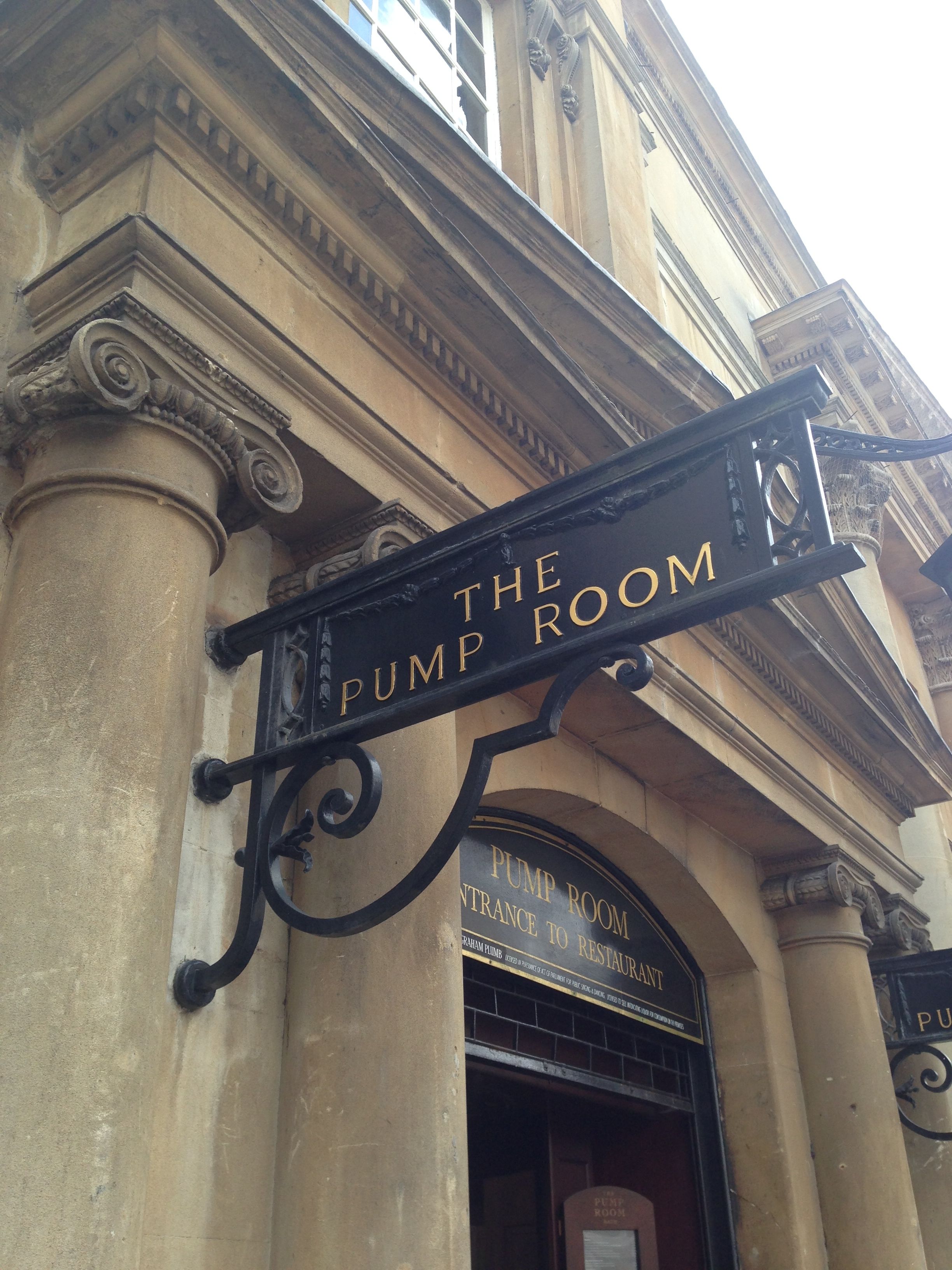
Most of my Books Read in July were read on the balcony of a cabin in Tennessee, in the Smoky Mountains, just 45 minutes away from the park. I was there for a week and my family likes to take reading vacations – at one point, every single resident of the cabin was sitting around reading. It was heaven. While I was there I also went hiking and acquired the World’s Gnarliest Sunburn (that took nearly four weeks to finish peeling) but the reading was really dizzying. Bill Bryson’s A Walk in the Woods is hilarious, and begins with a frank and bloodcurdlingly funny discussion of bear attacks and the deaths caused thereby, and just gets better from there. (So chosen because there is a portion of the Appalachian Trail that runs through the Smoky Mountain National Park.) I continue to read P.D. James even though I am getting less and less pleasure from her novels. The Murder Room had an interesting setup, about a museum of a not very popular time period that featured a room full of murder paraphernalia, but followed the pattern of her books that drives me a little nuts. I re-read Pride & Prejudice because my sister had brought my grandmother’s beautiful 1940s edition with her on vacation, and there’s never a bad time to reread Pride & Prejudice. It made me want to reread Persuasion. (So did my extremely quick but very fun trip to Bath later in the month, where I was unable to hang out with Emma Newman, my lovely client. Next time!)

bath

Holly Black’s White Cat isn’t the first Holly Black that I’ve read, but it might be my favorite. I love stories like this, with weird unspoken (and spoken) family tension, and gifts that are really burdens, and boarding schools and class and magic. It’s SO GREAT. When I went on my YA fantasy buying binge later in the month I tried to find the second two in the series but couldn’t. Maybe this month I’ll order them from Powells, where I got this copy – I don’t love the cover (hot model holding, you guessed it, a white cat, also without a shirt) because it feels disingenuously Sexy, but what can you do? Marketing is marketing.

Though I didn’t include it on this list, I finished The Luminaries by Eleanor Catton on June 30 so I feel it should count, and also it was really amazing. Kind of like Middlemarch, only a legal thriller, only set in New Zealand by way of that miniseries about the Klondike that starred Robb Stark. Really beautiful writing, even if the ending wasn’t the most satisfying, but I found its twisty structure and sense of atmosphere kept me going. Also she is my age!

As far as Books Purchased that go yet unread I am sure I will get to these fairly soon. I’ve been meaning to read Anna Dressed in Blood because I loved Antigoddess, and so many of my friends have raved at me about Graceling and Shadow & Bone that I felt like a genuinely bad person for not having got to them yet. Days of Blood and Starlight is the second in the series after Daughter of Smoke and Bone, and I love it SO MUCH. The first one was fairly straightforward – angst, pining, winged creatures, mysterious talents, but the second one has ratcheted it up to include genocide and megalomania and half-abandoned casbahs in the Moroccan desert. SO MUCH, I say again. I am about seventy-five pages to the end.

So yeah! That’s July. I’m not going anywhere in August – my reading in July was also curtailed by my trip to London, which was incredibly fun but didn’t leave much energy for reading anything other than MCU fanfiction – so I am looking forward to a lot of time spent not doing much of anything in particular. In particular I need to get my hands on Abaddon’s Gate, the third Expanse novel, before Cibolo Burns comes out.